
Key Features
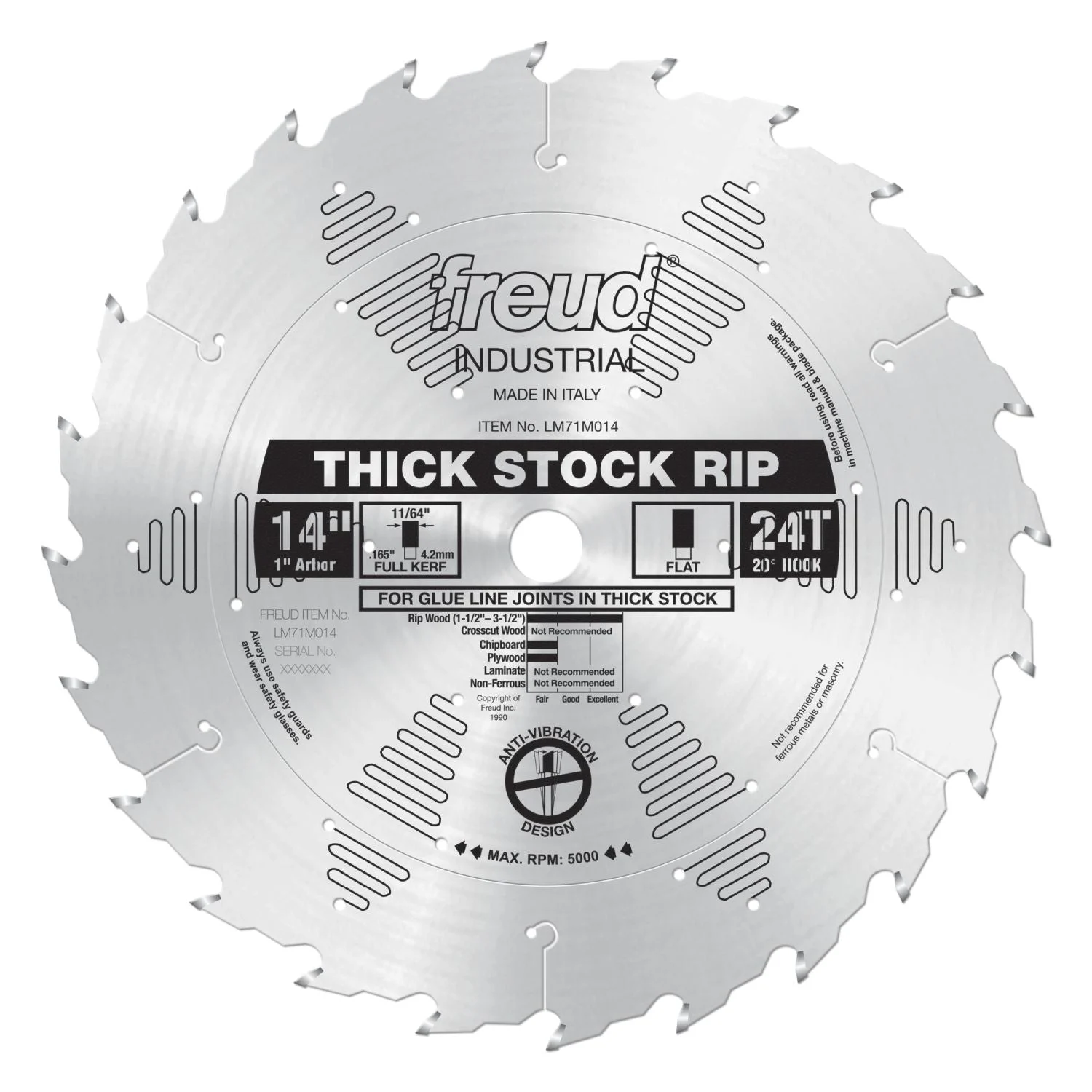
Built for Thick StockThe 24-tooth flat grind layout is tuned for fast ripping in hardwood and softwood, especially when you are working in heavier material where chip clearance matters. Stable Under LoadA heavy-duty .165 inch kerf and .118 inch plate help the blade stay flat in extreme ripping conditions, which matters when feed rates go up and stock gets dense. Freud Thick Stock Rip Blade EfficiencyLarge gullets clear chips fast, so the Freud LM71M014 14 in. Thick Stock Rip Blade keeps moving through lineal ripping cuts instead of packing sawdust into the cut.
Overview
The Freud LM71M014 14 in. Thick Stock Rip Blade is a heavy-duty circular saw blade made for industrial-style ripping on table saw setups. This is a rip blade designed for high-speed ripping in thick hardwood and softwood stock. Model Number: LM71M014. If your work is mostly straight-line ripping and you care more about feed speed, chip removal, and staying stable in thicker material than you do about polished crosscut finish, this is the right kind of blade.
Freud built this blade around a low 24-tooth count with a flat grind tooth pattern and a 20 degree hook angle. On the job, that combination means the blade wants to pull material through the cut efficiently, clear waste fast, and keep up in production ripping. That is why it is aimed at thick stock and lineal joint work instead of finish crosscutting. Freud also calls out an ideal working range of 1-1/2 inches to 3-1/2 inches thick, which gives you a very clear window for where this blade does its best work.
The heavy-duty build is one of the main reasons this blade matters. With a .165 inch kerf and .118 inch plate, it is thicker and more rigid than a general-purpose blade. That extra mass helps the blade stay flatter under load, especially in demanding ripping conditions where thinner plates can wander, heat up, or leave a rougher edge. If you are feeding hardwood or running long rip cuts repeatedly, rigidity is not just a spec on paper. It is what helps you get a straighter cut and more predictable performance.
Freud also uses its TiCo Hi-Density Carbide Ripping Blend here, which is aimed at long cutting life and sustained performance in wood. For the user, that means the cutting edges are built for repeated ripping duty rather than occasional mixed-use cuts. The blade also has large gullets, and that matters because thick-stock ripping generates a lot of chips fast. More room between teeth helps evacuate that waste so the blade cuts cleaner and carries less heat through the cut.
For jobsite and shop practicality, the blade includes Silver Ice Coating to resist corrosion and pitch buildup. That is a useful feature on a blade that may spend a lot of time cutting resinous softwood or sit in a shop between production runs. Less pitch on the blade helps maintain smoother cutting and reduces the drag that can build up over time. The blade image also shows an anti-vibration design and a maximum speed of 5,000 RPM, both of which matter when this blade is used in serious ripping applications.
In terms of fit, this is a 14 inch saw blade with a 1 inch arbor, so it is intended for equipment set up to accept that blade size and arbor configuration. Freud specifically notes that it can be used with manual feeding as well as power feeders in single or gang-ripping operations. That makes it a good match for professional woodworking shops, cabinet and millwork operations, and anyone processing thick hardwood or softwood stock in volume.
Just as important is what this blade is not for. Freud lists crosscuts in wood, laminate, and non-ferrous materials as not recommended. That is useful buying info because it tells you this is a purpose-built ripping blade, not a do-everything blade. If your priority is smooth finish crosscuts or sheet-good versatility, look elsewhere. If your priority is fast, stable ripping in thick material, this blade is right in its lane.
Who should buy it? Shops and pros doing repeated ripping in thick hardwood and softwood will get the most out of it. If you are running a table saw in production, cutting lineal joints, or pushing dense stock where chip clearance and blade stability matter, this blade makes sense. For casual weekend use or mixed cutting tasks, it is probably more specialized than you need. For dedicated ripping work, that specialization is exactly the point.
Made for Fast Thick-Stock Ripping
This blade is set up for one job: ripping thick wood efficiently and staying stable while doing it. The tooth count, hook angle, and heavy plate all work together to keep feed rates moving in demanding wood-cutting applications.
- 24-tooth flat grind layout for dedicated rip cutting
- Ideal material thickness range: 1-1/2 in. to 3-1/2 in.
- Heavy .165 in. kerf and .118 in. plate for stability in extreme ripping conditions
Key Specifications
| Model | LM71M014 |
|---|---|
| Blade Diameter | 14 in. |
| Tooth Count | 24 |
| Arbor Size | 1 in. |
| Kerf | .165 in. |
| Plate Thickness | .118 in. |
| Hook Angle | 20° |
| Maximum Speed | 5,000 RPM |
Compatibility
Arbor FitFits machines that accept a 14 in. blade with a 1 in. arbor. Feed MethodCan be used with manual feeding or with power feeders in single or gang-ripping operations. Best Material MatchDesigned for ripping hardwood and softwood. Not recommended for laminate, non-ferrous material, or wood crosscutting.
Built For
Woodworking Millwork Cabinet Shops Production Ripping Hardwood Ripping Softwood Ripping Lineal Joint Cutting Table Saw Use
Pro Tip
Keep this blade in its sweet spot. Freud rates the ideal working range at 1-1/2 in. to 3-1/2 in. thick stock, and that is where you are most likely to get the best balance of feed speed and surface finish.
Tool Nut’s Take
Tool Nut’s Take
Freud LM71M014 14 in. Thick Stock Rip Blade Means Business
This is a purpose-built rip blade for shops and pros who need stable, repeatable performance in thick wood, not a general-purpose blade trying to do everything.
- Who it’s for: Woodworkers, millwork shops, and production users ripping thick hardwood or softwood on 14 in. saw setups.
- Why it stands out: The heavy kerf and plate, 24-tooth flat grind design, and large gullets are exactly what you want when feed speed and chip clearance matter more than finish crosscuts.
- Worth knowing: This blade is specialized. If your work includes laminate, non-ferrous material, or a lot of crosscutting, use a different blade for those jobs.
Common Questions
- What kind of cutting is this blade designed for? It is designed for high-speed ripping operations in hardwood and softwood.
- What stock thickness is ideal for this blade? Freud lists the ideal working range as 1-1/2 in. to 3-1/2 in. thick.
- Can it be used with a power feeder? Yes. Freud states it can be used with manual feeding as well as with power feeders in single or gang-ripping operations.
- Is it a good choice for crosscuts or laminate? No. Crosscuts in wood, laminate, and non-ferrous materials are listed as not recommended.
Reviews
There are no reviews yet.